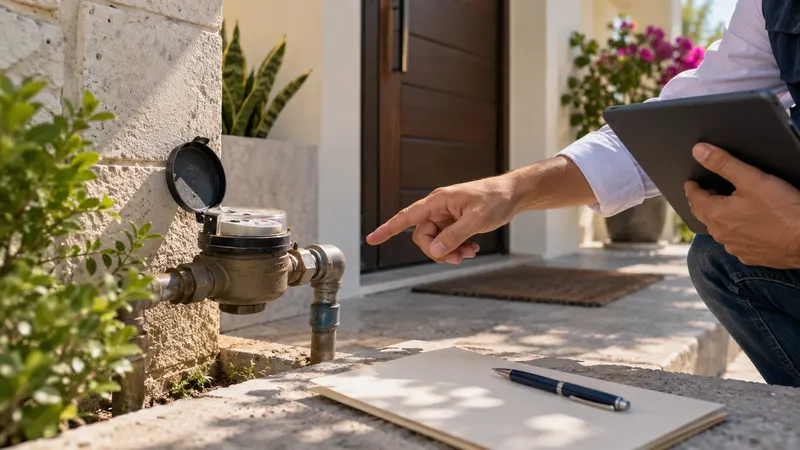
If water stops flowing, understanding its route through the home makes the problem easier to explain. Ask the owner for a simple account of the system before you need it: where water enters, where it is stored and what equipment supplies the taps.
CONAVI’s hydraulic guidance distinguishes storage and distribution components. A tinaco is a storage tank that may sit on the roof. A cisterna stores water elsewhere on the property, often below ground level. Arrangements vary: not every home has both, and they do not all work in the same way.
Ask for a safe introduction
You do not need to open tanks or climb an improvised ladder. Request a sketch or photographs and identification of controls residents are meant to know. Have the responsible person explain the actions permitted by the equipment instructions and maintenance plan.
Establish whether the system serves only your home or several units. Changing a shared control can affect neighbours. Keep the contact details of the person who can authorise and carry out work.
Put maintenance on a record
Ask when the last service took place, which tank it covered and who performed it. Mexico’s Health Ministry recommends washing and disinfecting cisterns every six months. Agree who will arrange the next review, considering equipment instructions and any contamination or incident requiring earlier attention.
This is not a chemical-mixing guide or an invitation to enter the tank. Height, electricity, chemicals and confined spaces can make an apparently simple job hazardous. Use competent personnel and ask about their safety procedure.
Clarify what the service includes
- Which tanks are covered and their stated capacity
- How water supply will be stopped and restored
- When the water can be used again under the procedure followed
- Whether lids, access points and visible leaks will be checked
- What completion record you will receive
Choose a time when the interruption is manageable. For a rented home, confirm payment responsibility and permission before booking. A maintenance record is easier to pass on than an unexplained phone reminder.
When water stops, observe before touching
Record whether the whole home is affected, when it began and any change you noticed from a safe place. Mention unfamiliar sounds, overflowing water or a pump that appears to run continuously. Do not keep restarting equipment or adjusting valves to experiment.
JAPAY offers low-pressure and no-water reporting routes for supply issues. Contact the property’s maintenance person about its own equipment. Our water-account guide helps keep the right contract details available.
Finally, a cleaned tank does not by itself establish that water from every tap is suitable to drink. That is a separate question involving the source, treatment and the particular household system.