Before paying the water bill for a rental, establish which account belongs to that door. Water may be included in the rent, billed separately or shared between units. You should be able to explain the charge, billing period and agreed payer afterwards.
First confirm who supplies the property. A neighbourhood name or proximity to Mérida does not identify the provider on its own. If it is JAPAY, start with the official portal, which brings together bill enquiries, duplicates, payments and reports.
Keep a short account record
Ask for the relevant bill and compare the address, contract number and account holder. Record who keeps payment receipts and receives notices. If the account remains in the owner’s name, agree how you will see each bill.
JAPAY lists a service for changing the named account holder. That is not automatically a tenant’s next step: check the requirements and agree with the owner what is appropriate before starting. Do not post the account number in a public group merely to ask whether nearby homes have water.
Sort out overlapping periods
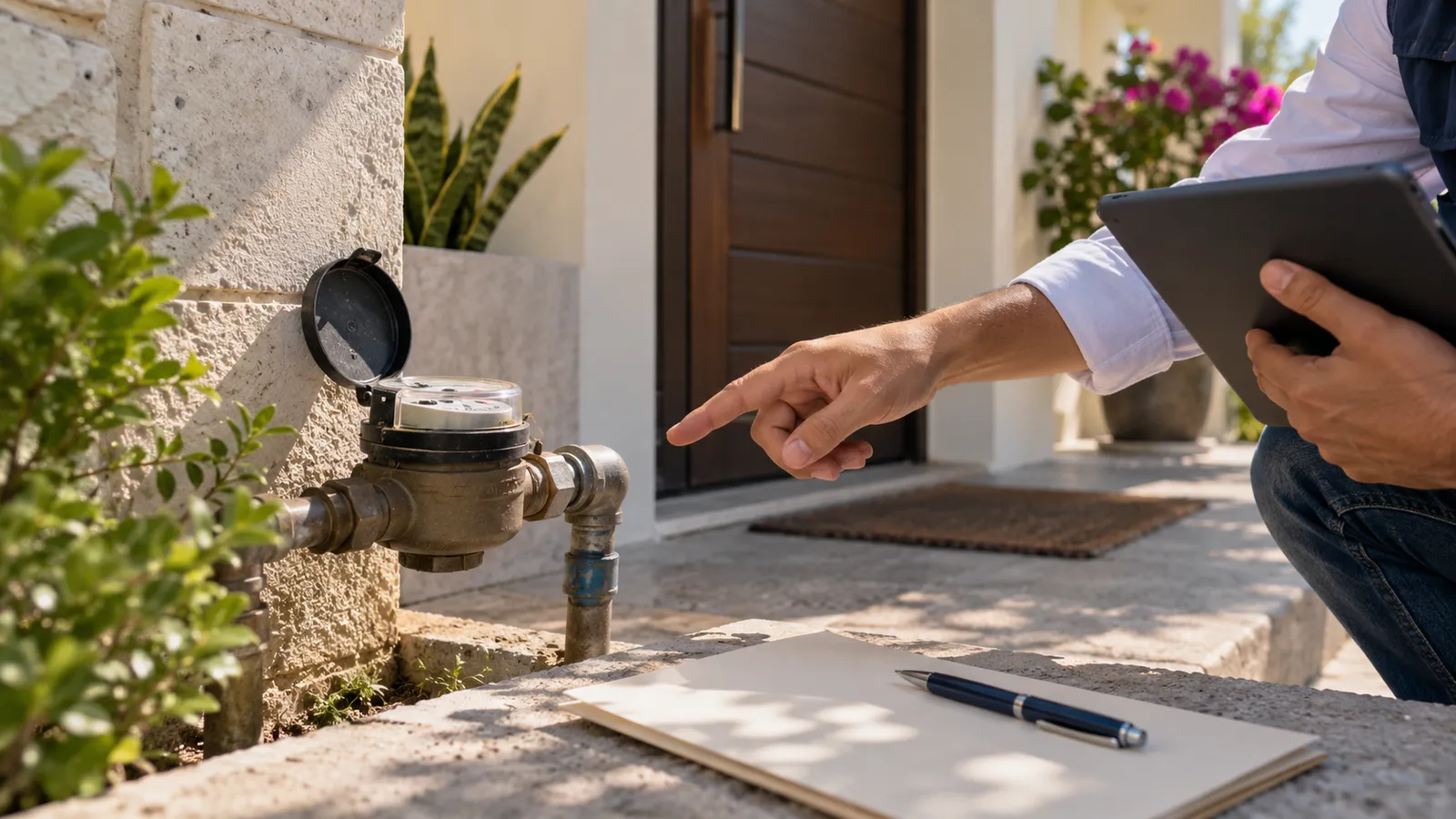
When you move in partway through a billing period, record the handover date and agreed allocation method. Photograph an accessible meter reading without interfering with the meter. If several units share water, ask how the bill is divided and what happens when a unit is empty.
Treat earlier arrears separately. Ask for them to be identified and resolved rather than relying on an unwritten promise of a later adjustment. Keep the bill, payment evidence and any agreed adjustment together.
Report observations rather than a diagnosis
JAPAY provides separate routes for leaks and low pressure or no supply. Have the address, contract number, approximate start time and a short description ready. Save the report reference or acknowledgement you receive.
Tell the property contact as well before assuming the fault is in the supply network. A home may have a water tank, cistern or pump that needs separate attention. One tap working while another does not is useful information for a technician, rather than a problem you need to diagnose yourself.
- Does the problem affect the entire property or one outlet?
- Can you see a leak from a safe position?
- Does the owner know of recent work on the system?
- Are other units in the same building affected?
Keep the follow-through clear
Record when you reported the issue, whom you contacted and the response. If a visit is arranged, agree how the technician will enter and who will be present. Do not commit the owner to a bill or approve work on their behalf without a clear arrangement.
At the end of the tenancy, this folder helps separate periods and outstanding items. It is one practical part of handing back the property that is easier to settle while you still have access.