A restored hacienda may offer an enjoyable visit while preserving important architecture. Understanding its history also requires attention to production, labour and relationships with nearby settlements. The main house is one part of the property. A pool or landscaped garden explains its current use, not how the entire estate worked in the past.
UADY’s overview of henequen haciendas connects production buildings, residences and workers’ settlements, and describes debt and restrictions on freedom. This context matters when assessing any account that presents henequen wealth as a benefit shared evenly across society.
Follow a process as well as a building
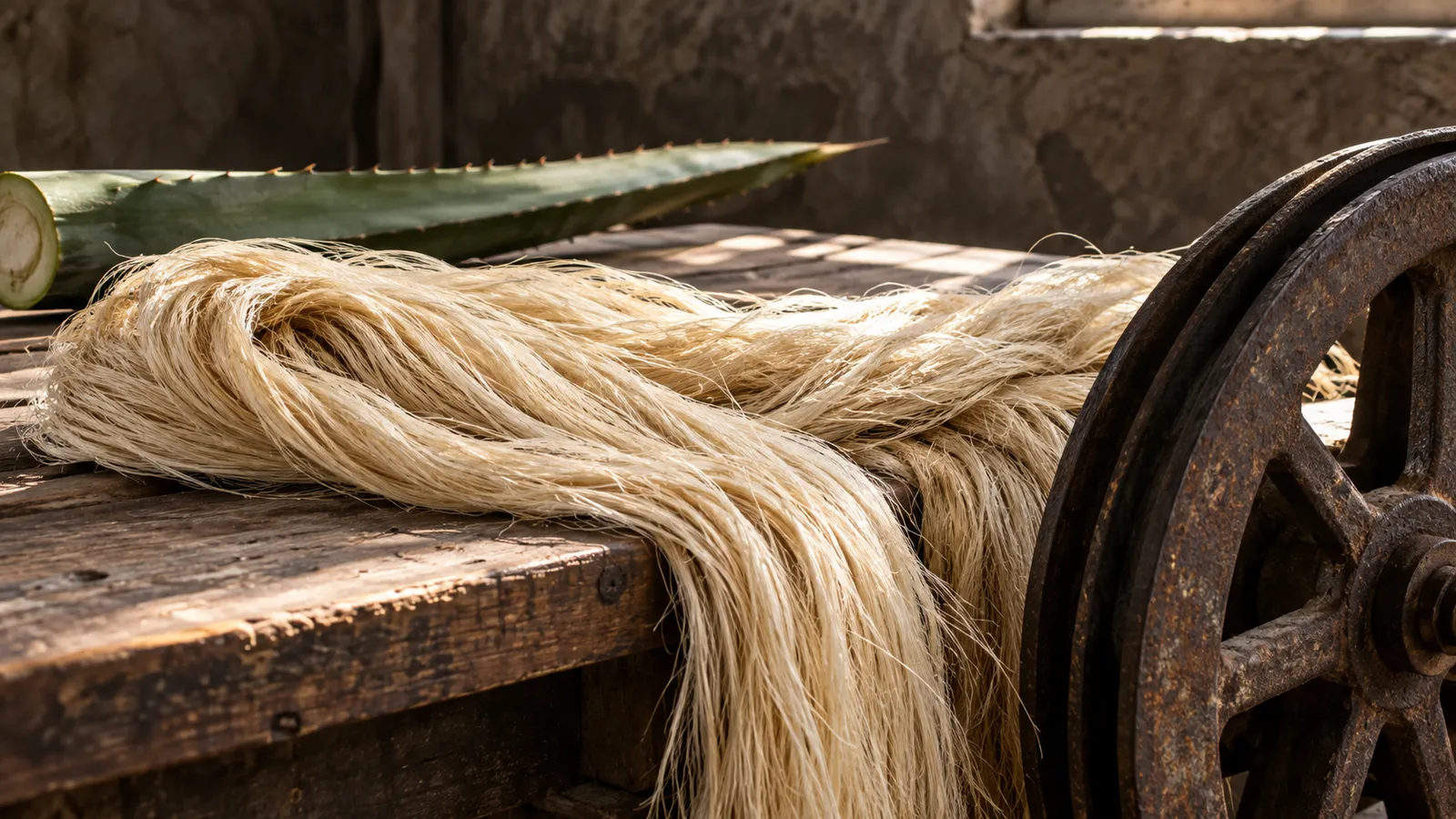
At a machine, ask what operation it performed, what went into it and what came out. A clear explanation should distinguish cultivation, fibre extraction and subsequent manufacture. INAH connects henequen with an international fibre and rope industry. That scale encourages questions about trade and transport beyond the estate itself.
If a demonstration is offered, ask which part reproduces a historical process and which arrangements are modern adaptations for operation or safety. A moving machine does not make the entire scene an exact reconstruction. Keep the indicated distance and do not touch fibres, pulleys or mechanical parts without permission.
Ask about the people who sustained production
Look for explanations of who worked, where they lived and what conditions governed their lives. Are documents, testimony, photographs or identified studies available? Does the account distinguish periods and different labour situations? A story concerned only with owners leaves much of everyday operation unexplained.
Do not automatically transfer a claim about one estate to all others. Questions about coercion and inequality are necessary, but their particular forms require dates and places. Nor should a guide working today be expected to disclose private family experiences to complete your visit.
You can ask for a reading recommendation instead of demanding an immediate answer to a complicated historical question. A named source gives you something to examine after the tour and a way to separate evidence from anecdote.
Recognise what has changed
Ask which buildings retain older elements, which have been reconstructed and which serve the property’s present function. Restoration can be valuable without returning every space to one historical moment. Look for plans or images that allow comparison, and accept when a detail remains unknown.
Notice whether former housing areas are included in the visitor route or remain inhabited. Do not enter homes, courtyards or land because you consider them part of a historic landscape. A continuing community does not make its everyday life an open exhibition.
Choose a visit for its content
Before booking, ask what interpretation is included: machinery, labour history, documents, the amount of guided explanation and accessible areas. An architecture-focused visit may suit you, provided you understand its scope.
Connect this reading with Paseo de Montejo without assuming every fortune or building had an identical origin.