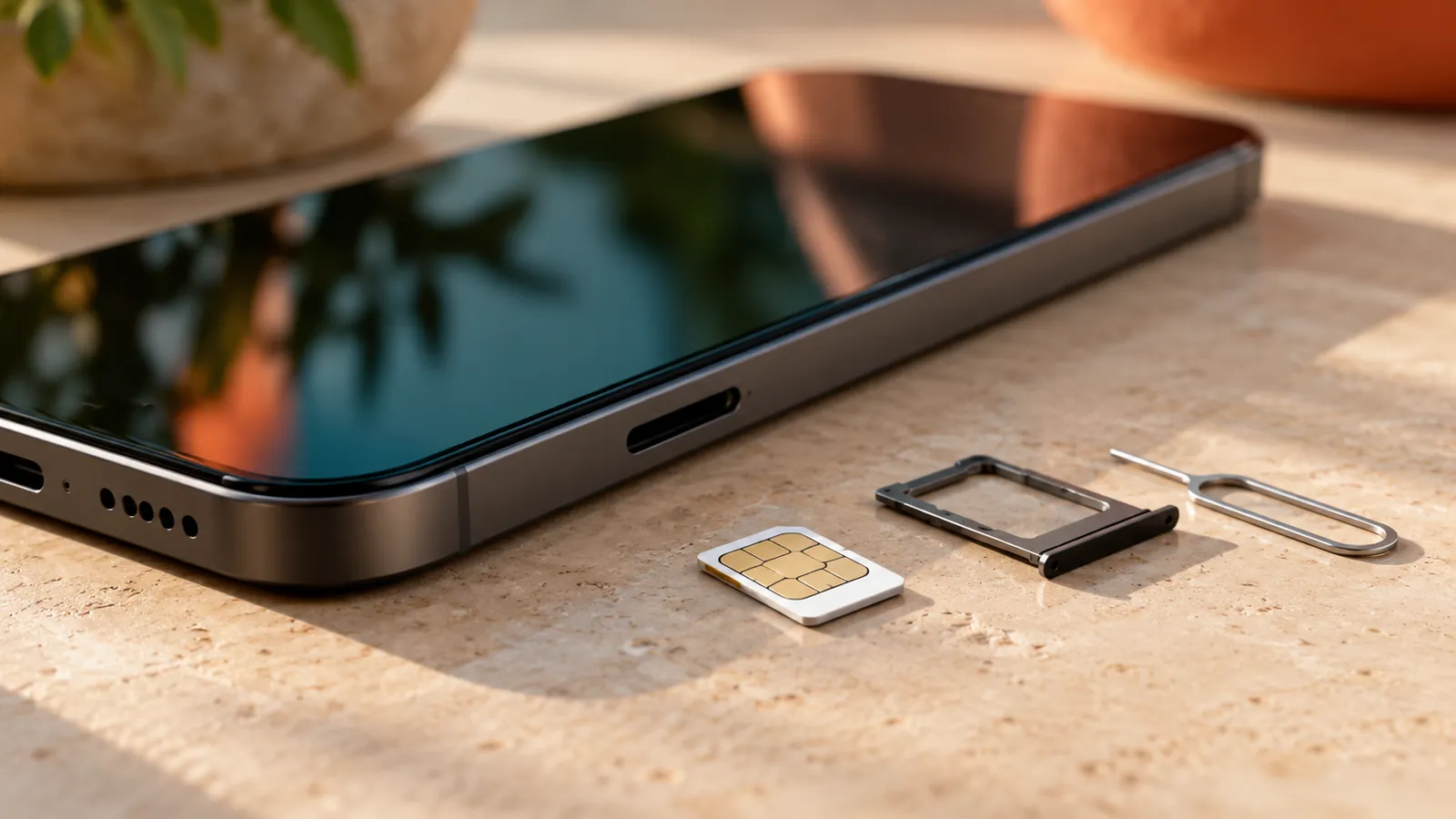
Before comparing packages, check whether your phone can use the option you are considering. Record its exact model and regional version, and confirm that it is unlocked for another carrier. Then decide what you need: data, calls, texts, a Mexican number or a hotspot for a laptop.
An eSIM can remove the physical-card swap, but compatibility, installation and activation still matter. A physical SIM does not by itself establish that the device and package will work as expected either. Compare the whole service rather than the format alone.
Start with Mexican carrier pages
At this guide’s check on 1 October 2026, Telcel offers prepaid eSIM Amigo, AT&T offers the eSIM-based AT&T Go and Movistar publishes an eSIM activation route. These are places to investigate an offer, not a ranking of network performance.
Use each company’s Mexican site. An offer from the same brand in another country can carry different conditions. Also distinguish a new line from converting an existing line; do not assume the instructions are interchangeable.
Telcel’s eSIM Amigo offer requires an unlocked, compatible device. Check the requirements for your particular product with the carrier and phone manufacturer before paying, especially if you bought the phone in another market.
Include registration in the arrival plan
Do not assume purchasing a package is the last activation step. Current carrier pages include line-registration or linking instructions. Telcel publishes requirements, including information for foreign users. Check your circumstances directly rather than treating another visitor’s experience as proof of eligibility.
Use official channels and read the privacy notice before providing identity information. For current regulatory information, begin with the Comisión Reguladora de Telecomunicaciones. Older IFT pages may be retained as reference archives.
Confirm when the package’s validity begins and what connection you need for installation or activation. Keep recovery instructions somewhere available, but do not publish an activation QR code or information that could let someone else use the line.
Compare what the allowance actually covers
Make a short record for every candidate:
- Total price and currency, including initial charges
- Start and length of validity
- General-purpose data versus app-specific benefits
- Calls, texts and a number, if required
- Hotspot or tethering conditions
- Automatic renewal, top-up rules or minimum commitment
- Support and replacement steps if you change or lose the phone
“Unlimited social media” should not be read as unlimited data for every task. Read the package conditions and included destinations if your trip continues outside Mexico. A travel offer should also be checked for the services you will need after arrival, rather than judged only by its headline data amount.
Check your destinations instead of choosing a national winner
Look up the accommodation, work location and out-of-city stops in the operator’s coverage information. AT&T’s map supports address searches and explains service limitations. Maps help narrow the options; they cannot replace testing inside the place where you will use the phone.
If work depends on mobile data, consider a limited initial commitment you can evaluate before buying a longer package. Keep essential maps and arrival instructions available offline while you establish the connection.
For a work backup, combine this with our accommodation-internet checklist. Decide after checking the device, activation steps and actual locations, rather than committing to months of service based on an advertisement.