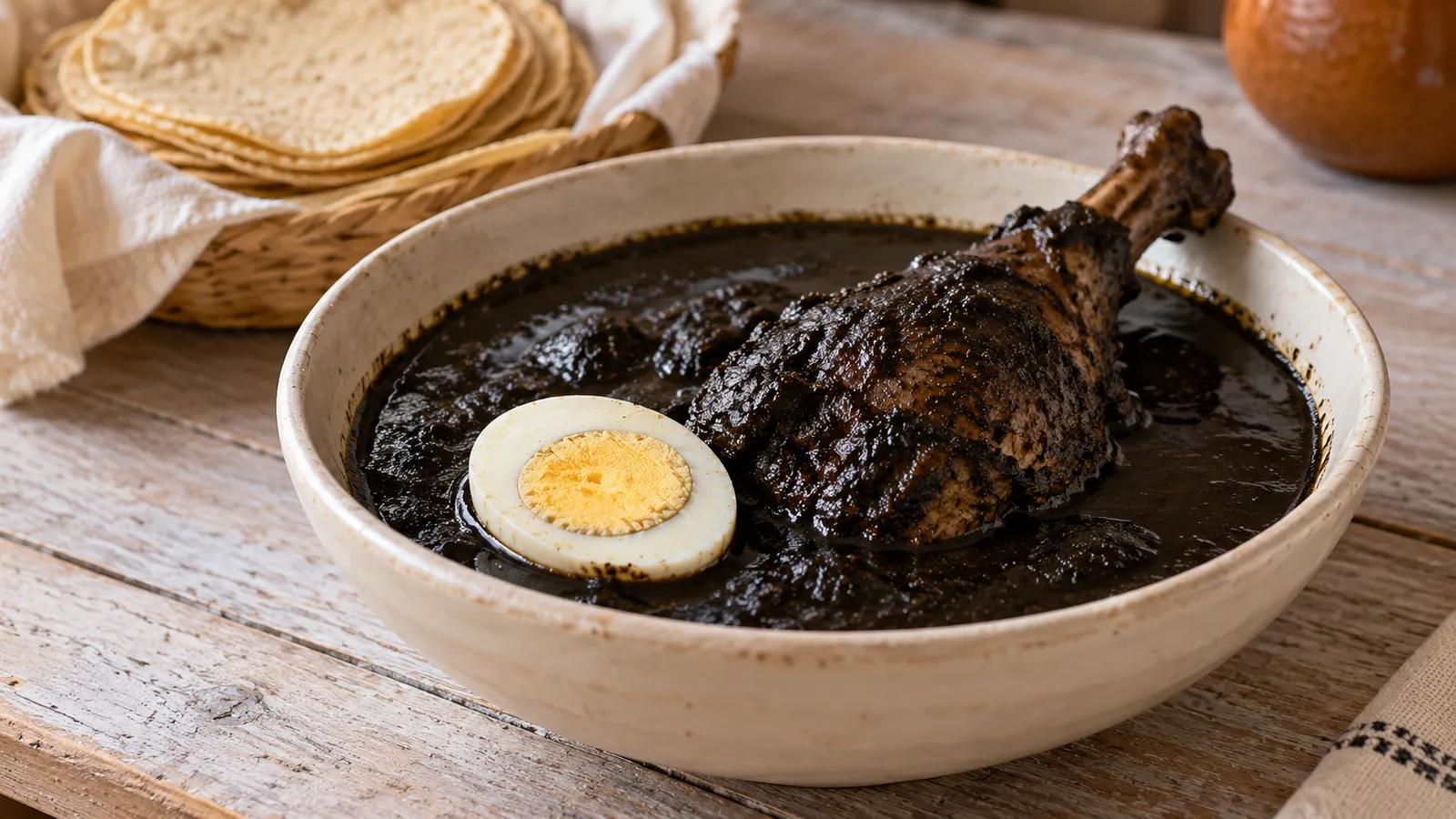
Relleno negro’s dark colour is striking, but it does not tell you how hot a particular serving will be. The kitchen’s preparation and the accompaniments matter more than an imagined colour scale. Start by finding out what is in today’s version and how it is sold.
SEFOTUR’s description connects the dish with charred dried chiles and spices, and describes poultry and hard-boiled egg. It also notes plated, taco and torta presentations. Use that outline to begin a conversation rather than to prescribe what every cook must put in the pot.
The seasoning is already part of the dish
Once a seasoning has been cooked into a stew, asking for it on the side may not be possible. “¿El picante está en el recado o se añade al servir?” asks whether the chile heat is in the seasoning mixture or added during service. The answer establishes what the kitchen can change.
Say plainly if you prefer less heat. If you have an allergy, name the actual ingredient rather than describing it as a low tolerance for spicy food. Those are different requests. The black appearance does not identify everything in the mixture.
Choose a format before comparing prices
A taco may be sold by the piece. A torta is a bread-based sandwich and can contain additional items assembled around the filling. A plate may include broth, poultry, egg or other components, depending on the version. Ask what each option contains rather than treating them as equivalent quantities of the same meal.
A smaller serving, when offered, can help you discover which format you would order again. There is no need to buy a full plate of every unfamiliar stew. For a shared meal, first decide how many dishes you want on the table, then ask which portions suit that plan.
Ask about unfamiliar components
If you do not recognise a piece in the bowl, ask before assuming what it is. “It is the filling” may need a follow-up: “¿Con qué carne y qué otros ingredientes lo hacen?” That asks which meat and other ingredients are used. It is particularly relevant when you avoid pork, egg or another specific food.
A menu heading naming chicken or turkey need not explain the entire preparation. If your choice depends on the dish containing only that meat, ask the kitchen to check the stew, any separate filling and the accompaniments together. You are seeking information about this serving, not debating the one correct regional recipe.
Make your next order easier
Keep three notes about the version you tried: its format, the ingredients the kitchen confirmed, and how hot it tasted to you. That personal record is more useful than labelling all relleno negro mild or fiery.
If you later want to buy the seasoning, read our guide to achiote and recados. For today’s table, distinguish individual pieces, portions and weight-based orders before confirming how much to buy.