You do not need to know bird names to enjoy a first outing. Start by noticing movement, feeding places and repeated sounds. A route with time to stop is more useful for learning than trying to build a long species list on day one.
When booking, say that you are a beginner. Ask whether the outing is on foot or by boat, how demanding it is and whether the guide can lend equipment and explain it. A trip designed to find many species may move at a different pace from the one you need for learning.
Try the binoculars before looking for birds
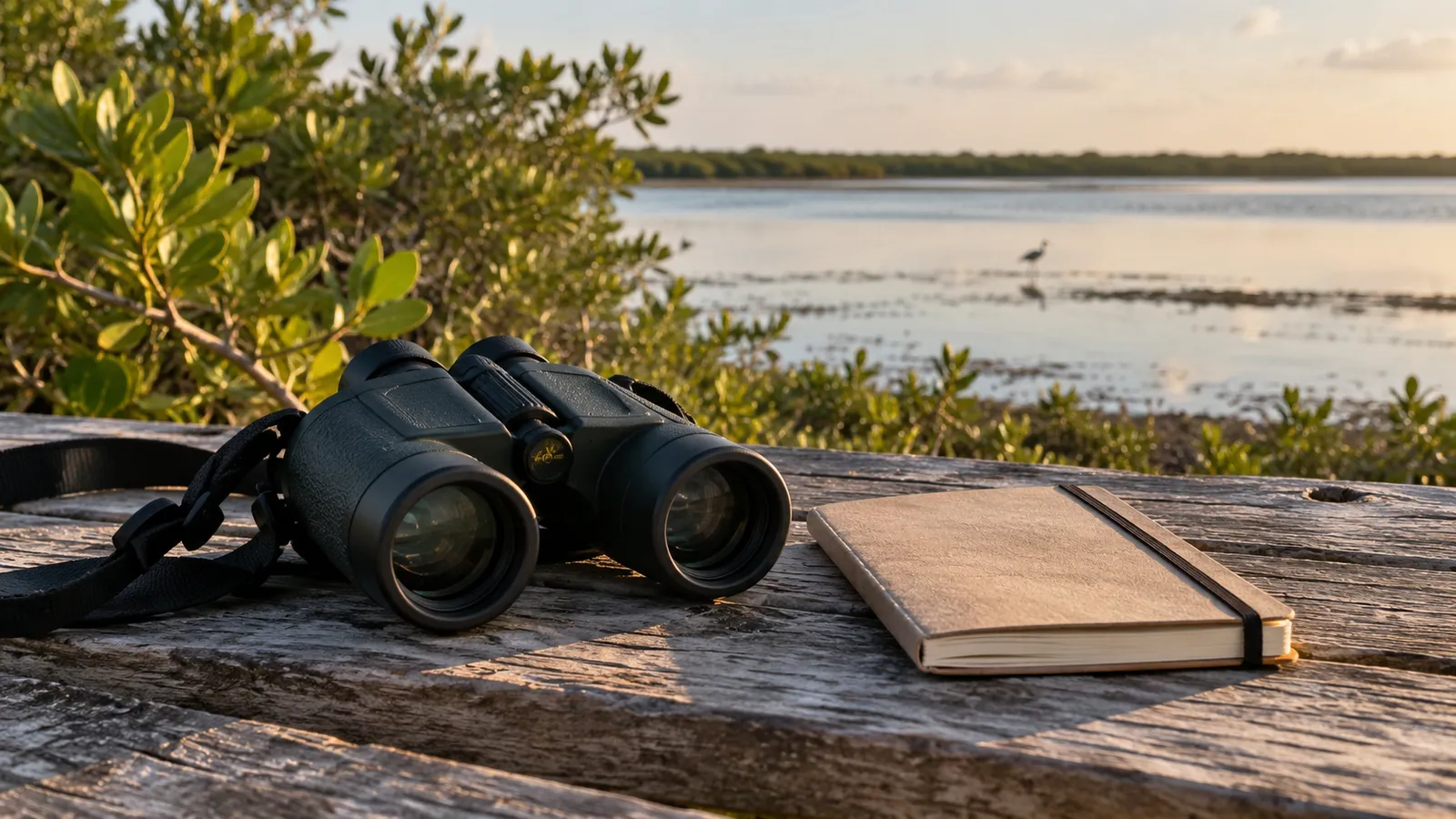
Adjust them while looking at a stationary object near your starting point. Make sure the view feels comfortable and that you can focus without a struggle. If the equipment is borrowed, ask for help at the beginning. Working out unfamiliar controls while a bird moves through vegetation can be frustrating.
CONABIO’s observation guide introduces equipment and field guides. For a first experience, trying binoculars before buying is sensible. A field guide covering the region helps you compare your observations with birds that could actually occur there.
Observe first and name it later
Notice approximate size, bill shape, colours, posture and surroundings. Write something you can remember. “Dark bird, long legs, walking along the water’s edge” is more useful than attaching a name too quickly. A photograph taken from your existing position can help you check afterwards.
Make time to listen and watch ordinary behaviour. The interesting part may be a sequence of movements rather than a perfect photograph. Keeping an identification uncertain is better than turning a guess into a definite record.
Distance belongs in the experience
Avoid moving a group close enough to make birds retreat. Do not use food to lure them or recorded calls to force a response. CONANP advocates watching without changing natural behaviour and avoiding playback.
CONABIO’s ethics guidance includes leaving nests undisturbed and avoiding drones on recreational birdwatching outings. Do not publicly share precise locations of nests or sensitive species. Giving an animal room to continue what it was doing matters more than the photograph you bring home.
Choose an outing you can enjoy throughout
Carry water, sun protection and suitable footwear, and ask about shade, breaks and toilets. Start with a manageable duration and explain any difficulty with the terrain or boarding a boat.
You can use this preparation for a trip in Sisal or another permitted setting. A useful first goal is to return with a few careful observations and an interest in looking again, without needing one particular animal to appear. The skill you develop stays useful on future walks, even when the destination changes.